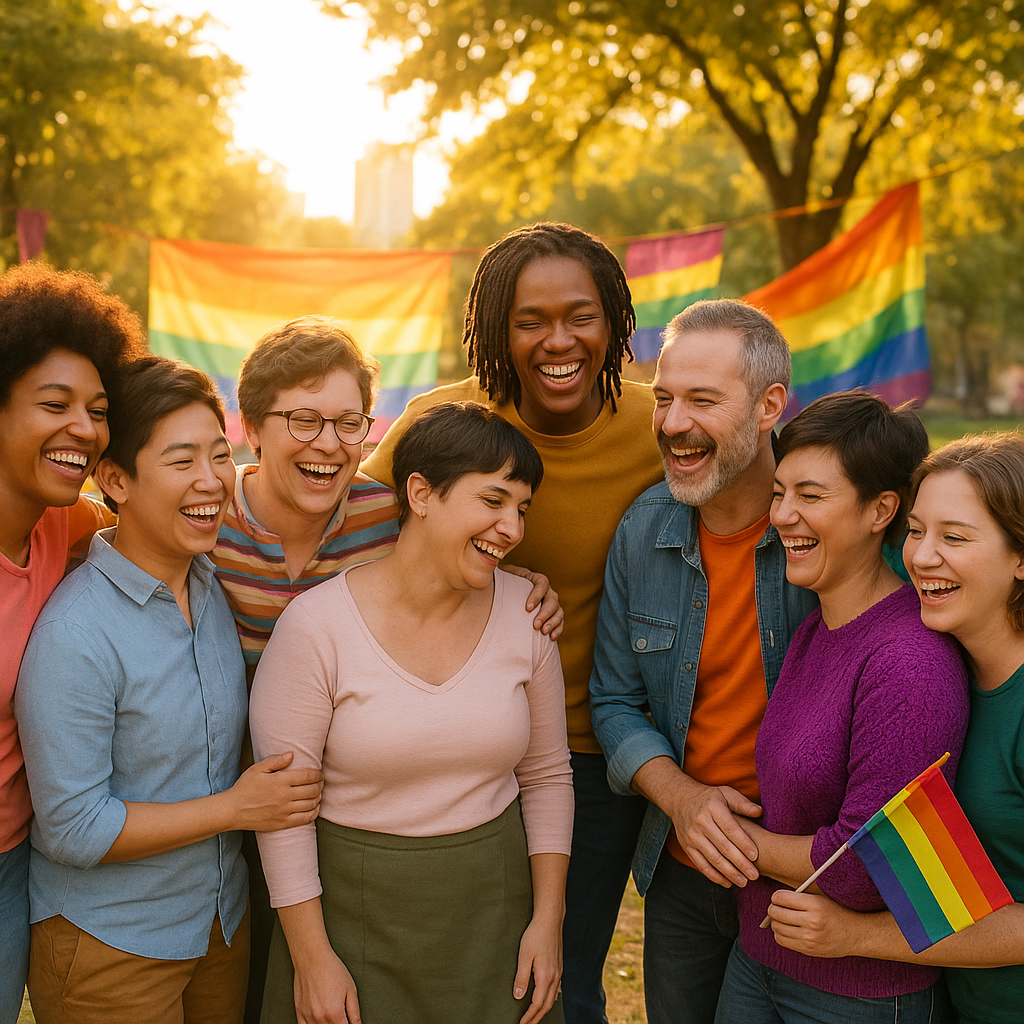
There’s something profound that happens when a person discovers they are not alone. For many queer people, this moment — finding others who share their experiences, their joys, their struggles — is nothing short of life-changing. Community sits at the very heart of queer identity, not just as a social nicety, but as something deeply tied to mental health, self-understanding, and survival. Whether it’s a local LGBTQ+ centre, an online forum, a Pride march, or a group of friends who simply get it, belonging to a community can reshape how queer individuals see themselves and navigate the world around them.
This article explores the many dimensions of queer community — what it offers, why it matters so deeply, and how it continues to evolve in an increasingly complex social landscape.
Why Community Matters So Much for Queer People
For many LGBTQ+ individuals, growing up can feel profoundly isolating. Unlike other minority identities that are often shared within families, queer identities are frequently discovered in environments where no one else in the immediate circle shares that experience. A young gay person may grow up in a household where their identity is misunderstood, minimised, or outright rejected. A non-binary teenager might spend years feeling like they exist outside of every social category available to them.
This is where community becomes not just comforting, but essential. Research consistently shows that having access to affirming LGBTQ+ communities is one of the strongest protective factors against anxiety, depression, and suicidality among queer youth and adults alike. According to data from The Trevor Project, LGBTQ+ young people who report having at least one accepting adult in their lives are 40% less likely to attempt suicide. Wider community belonging amplifies this effect significantly.
Community offers queer people something that mainstream society often withholds: unconditional recognition. The experience of being truly seen — not despite your identity, but including it — is deeply therapeutic. It affirms that your existence is not a problem to be solved.
The Psychological Sense of Belonging
Psychologists often refer to the concept of “psychological sense of community” — the feeling that one is part of a group that matters, where members feel connected to one another. For LGBTQ+ individuals who have experienced marginalisation, rejection, or invisibility, this sense of belonging carries extraordinary weight.
Studies published in peer-reviewed journals have found that queer people who feel a strong connection to their LGBTQ+ community report higher levels of self-esteem, resilience, and life satisfaction. They are also more likely to access mental health support, engage with civic life, and advocate for themselves in healthcare and other settings. Community doesn’t just feel good — it builds capacity for living well.
The Role of Physical LGBTQ+ Spaces
There’s a reason that queer bars, community centres, youth groups, and safe spaces have historically been so fiercely protected. Physical LGBTQ+ spaces provide something irreplaceable: an environment where queer people can exist without having to justify or explain themselves. They are places where the default assumption is acceptance rather than tolerance.
The importance of LGBTQ+ community spaces extends far beyond socialising. These venues have historically served as hubs for political organising, health information (particularly during the HIV/AIDS crisis), crisis support, and cultural expression. Spaces like the Stonewall Inn in New York or the many LGBT centres across the UK became epicentres of resistance, solidarity, and joy.
Today, many of these physical spaces face mounting pressures. Rising property costs have led to the closure of numerous queer bars and venues in cities like London, Manchester, and Edinburgh. The loss of these spaces is mourned deeply within communities, because they represent more than nightlife — they represent sanctuary.
Community Centres and Youth Groups
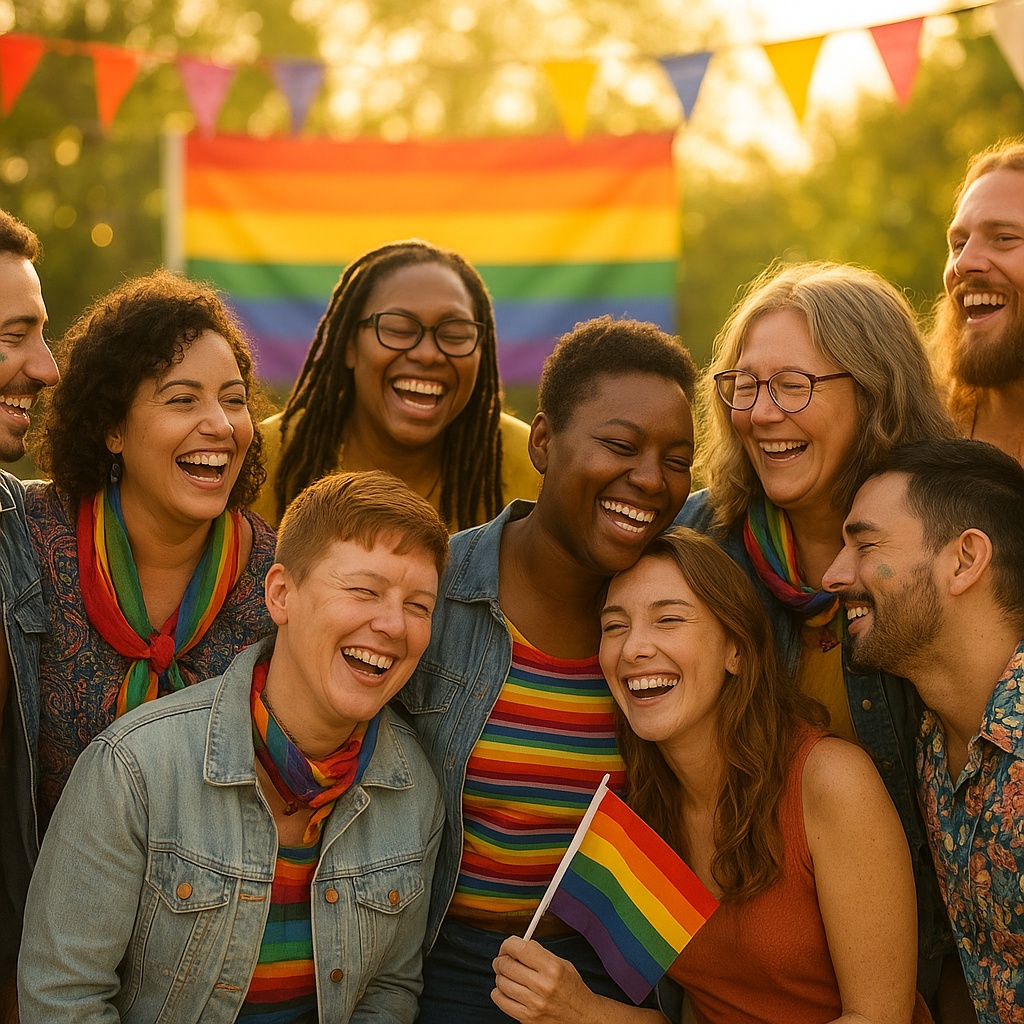
While queer bars and clubs have often dominated the cultural imagination of LGBTQ+ community life, community centres and youth organisations play an equally vital — and arguably more inclusive — role. These spaces welcome queer people of all ages, backgrounds, and identities, often providing:
- Peer support groups for LGBTQ+ young people navigating school and family challenges
- Social activities that don’t centre alcohol, making them accessible to younger or sober members
- Resources and signposting for housing, legal, and mental health support
- Cultural events that celebrate queer history, art, and identity
- Safe drop-in spaces for those who may be facing homelessness or family rejection
Organisations like the Albert Kennedy Trust in the UK highlight a stark reality: LGBTQ+ young people are disproportionately represented among the homeless youth population, often as a direct result of family rejection. Community organisations fill the gap left by broken family structures, providing connection and practical support where it’s needed most.
Online Communities and the Digital Shift
Long before many queer people are able to access in-person community spaces, they often find connection online. Digital spaces have become a vital first point of contact for LGBTQ+ individuals who are not yet out, who live in rural or less accepting areas, or who are navigating the early stages of understanding their identity.
Forums, social media groups, YouTube channels, and platforms like Reddit and Discord host thriving queer communities where people share coming-out stories, ask questions without fear of judgement, and find others who reflect their experience. For someone in a small town with no visible LGBTQ+ presence nearby, an online community can quite literally be a lifeline.
However, digital spaces come with their own complexities. Online environments can expose vulnerable queer people to harassment and hate, and algorithmic bubbles can sometimes amplify division within communities rather than fostering understanding. The key is finding spaces that are actively moderated and genuinely affirming — and understanding that online connection, while valuable, works best as a complement to, rather than a replacement for, real-world belonging.
Challenges Faced by LGBTQ+ People in Finding Community
Not every queer person finds community easily, and it’s important to acknowledge the very real barriers that exist. Some of the most common challenges include:
- Geographic isolation: LGBTQ+ spaces and events are heavily concentrated in urban areas, leaving queer people in rural communities with far fewer options for connection.
- Intersectional marginalisation: LGBTQ+ communities, like all communities, can carry their own forms of racism, ableism, and transphobia. Queer people of colour, disabled queer people, and trans individuals sometimes find they are not fully welcomed even within spaces ostensibly designed for them.
- Economic barriers: Accessing community events, LGBTQ+ venues, or travelling to Pride events can be financially prohibitive for those on low incomes.
- Cultural and religious contexts: For queer people from communities where LGBTQ+ identities are heavily stigmatised — whether due to cultural, religious, or familial factors — the act of seeking out queer community can feel deeply risky.
- Age and generational gaps: Older LGBTQ+ people, particularly those who lived through the AIDS crisis or pre-decriminalisation eras, sometimes find that younger queer spaces don’t account for or honour their specific experiences.
Addressing these challenges requires queer communities to continually interrogate their own structures — asking who is present, who is absent, and why.
Pride: Celebration, Politics, and Community
Pride events are perhaps the most globally visible expression of LGBTQ+ community. What began as a commemoration of the Stonewall Uprising in 1969 has grown into a worldwide movement, with events now taking place in hundreds of cities across the globe — from London and Glasgow to São Paulo and Taipei.
For many queer people, attending Pride for the first time is a formative, emotional experience. The sight of thousands of people openly celebrating identities that the world often tells them to hide is genuinely transformative. Pride offers a rare glimpse of what the world could look like: vibrant, diverse, and unapologetically queer.
Yet Pride is also contested. Debates around corporate sponsorship, police presence, and the commercialisation of what was originally a protest movement are ongoing. These tensions are not destructive — they reflect the vitality and political engagement of communities that refuse to be complacent. The best Pride events hold space for both celebration and political consciousness, honouring the roots of the movement while looking ahead.
Building Inclusive Communities Within the Community
The acronym LGBTQ+ encompasses an extraordinarily wide range of identities and experiences. Lesbian, gay, bisexual, transgender, queer, intersex, asexual, and many other communities have distinct histories, challenges, and needs. One of the most important ongoing conversations within LGBTQ+ spaces is about how to build communities that are genuinely inclusive — not just inclusive in name.
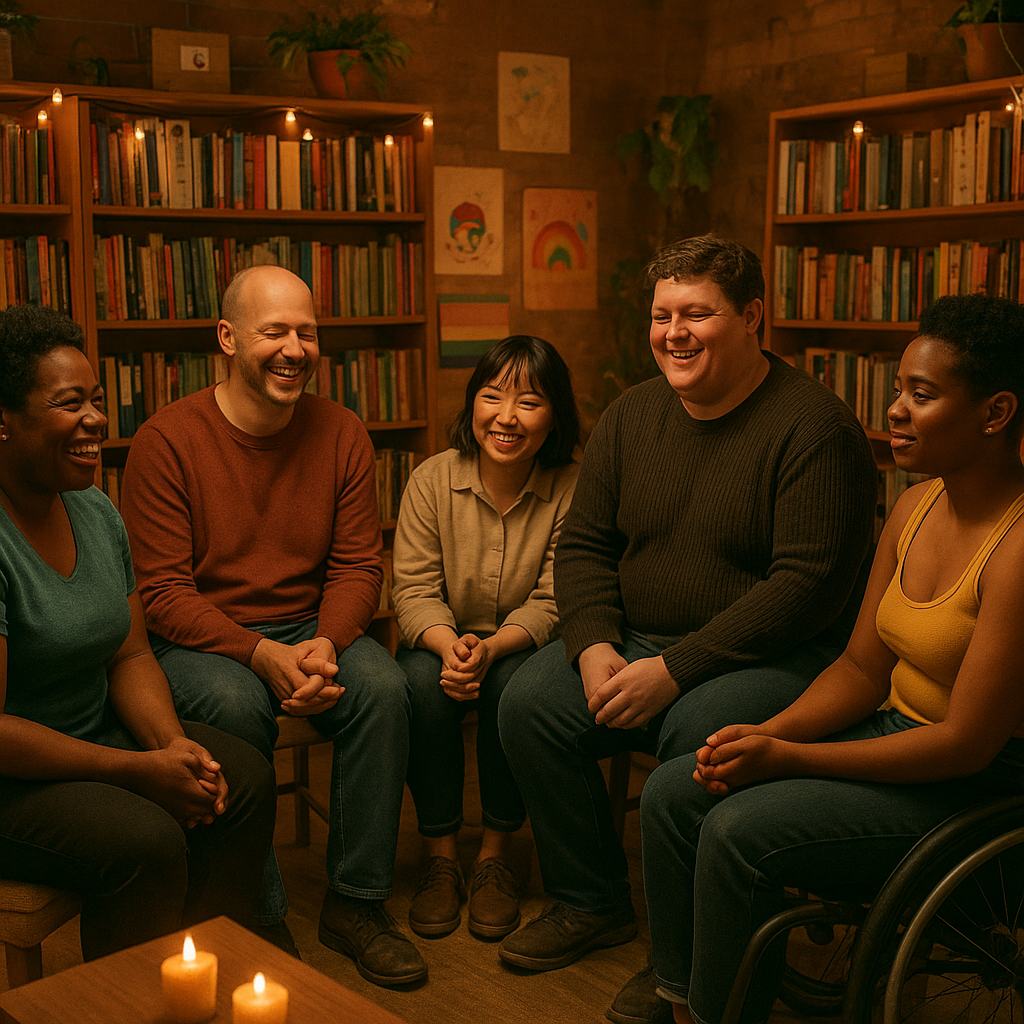
This means actively centring the voices of trans and non-binary people, particularly trans women of colour, who have been foundational to the queer rights movement but are frequently marginalised even within LGBTQ+ spaces. It means making events accessible to disabled people, providing translation and interpretation where needed, and creating programming that speaks to the specific experiences of bisexual and asexual individuals, who often report feeling erased or misunderstood even in queer contexts.
True community is built through ongoing effort, not assumption. It requires listening, adaptation, and a willingness to be uncomfortable in the service of growth.
The Lifelong Nature of Queer Community
It’s worth noting that the need for queer community doesn’t diminish with age or with the achievement of legal rights. LGBTQ+ older adults face unique challenges — including isolation, inadequate care provision, and the legacy of living through eras of acute persecution — that make community belonging just as vital in later life as in youth. For those coming out later in life, finding affirming community can be a particularly significant and transformative step.
Research from Age UK and other organisations highlights that LGBTQ+ older adults are significantly more likely to live alone and less likely to have family networks to rely on compared to their heterosexual peers. This makes community infrastructure — social groups, befriending services, LGBTQ+-affirming care homes — a genuine matter of wellbeing and dignity.
Queer community, at its best, is not a phase of life. It is a lifelong ecosystem of support, joy, and shared understanding that evolves alongside the people within it. Within that ecosystem, forming meaningful queer relationships is another dimension of belonging that community spaces uniquely support and nurture.
Conclusion
Community has always been central to queer survival and flourishing. From the underground networks of the pre-liberation era to the vibrant digital spaces of today, LGBTQ+ people have consistently found and created spaces of belonging in a world that has not always welcomed them. The power of that belonging — its capacity to reduce isolation, build resilience, affirm identity, and foster joy — is well-documented and deeply felt by those who have experienced it.
Understanding why queer community matters also means understanding the barriers that prevent everyone from accessing it equally. Geography, race, disability, economic status, and cultural background all shape who can find community and how. Building stronger, more genuinely inclusive LGBTQ+ communities requires ongoing honesty about these gaps and a commitment to closing them.
What remains constant is the fundamental human need to belong — to be known, accepted, and celebrated. For queer people, community has long been the place where that need is most fully met. And that makes it not just important, but irreplaceable.